Diamond PlatnumzSinger and founder of WCB Wasafi, speaking to NPR (2018)
The name explains the sound. “Bongo” is street slang for Dar es Salaam, taken from the Swahili word ubongo, “brain”, because you need brains and street smarts to survive in the city. “Flava” is flavour. Since the 1990s the term has covered Tanzania’s Swahili-language pop: hip-hop and R&B beats carrying melodies from taarab and dansi, the coastal and dance-band music of earlier generations.
What started as teenagers rapping over American instrumentals is now East Africa’s biggest musical export, heard from Nairobi and Kampala to Kinshasa, Johannesburg and the diaspora in Europe and the US.
Context and History
Bongo Flava grew out of imported records. American hip-hop and R&B reached Tanzania in the 1980s, but high import duties meant only wealthier families could afford them. When the economy was liberalised, the tapes reached middle-class teenagers in Dar es Salaam’s Kinondoni district. They copied what they heard, translated it into Swahili and performed it at beach concerts, local halls and rap competitions.
The 1990s: Swahili Rap Arrives
The first breakthrough came in 1991, when Saleh Jabir recorded Swahili lyrics over the instrumental of Vanilla Ice’s “Ice Ice Baby” and sold the tape to distributors around Dar es Salaam. It proved there was an audience for rap in Swahili. Groups such as Kwanza Unit and Hard Blasterz followed, along with solo rappers Mr II (Sugu), Professor Jay and Juma Nature. Alongside the rap, a sung, melodic style of Swahili pop began to grow, and by the end of the decade the two were known together as Bongo Flava.
The 2000s: From the Streets to the Mainstream
By the early 2000s Bongo Flava was Tanzania’s dominant youth music. Juma Nature, Professor Jay and Mr II became household names, while Lady Jaydee and Ali Kiba moved the sound toward love songs and smooth R&B. The lyrics stayed rooted in Tanzanian life: love, money, the hustle of Dar es Salaam and, often, sharp comments on society and politics. Because Swahili is spoken across the region, the music spread quickly to Kenya and Uganda.
Diamond PlatnumzSpeaking to GRAMMY.com (2025)
The 2010s: The Wasafi Era
Diamond Platnumz changed the scale of the genre. He began recording in 2006 with money from selling clothes, broke through with “Kamwambie” in 2010, and moved Bongo Flava’s slow, heartbroken songs toward upbeat, danceable production. In 2015 he founded the label WCB Wasafi, which launched Harmonize, Rayvanny, Mbosso and later Zuchu. Collaborations with Nigeria’s Flavour and Davido, Congo’s Fally Ipupa and Koffi Olomide, and the US rapper Rick Ross connected Tanzania to the wider African pop market.
The videos travelled as far as the songs. Diamond became the first sub-Saharan artist to pass one billion views on YouTube, and in 2020 “Waah!” with Koffi Olomide became the first African music video to reach two million views within 24 hours.
The Present: Swahili to the World
In 2021 WCB Wasafi signed a partnership with Warner Music Group, and Diamond has since performed in Dubai, London and New York, including HOT 97’s Summer Jam in 2025. Producers now blend Bongo Flava with Amapiano, Afrobeats and rumba, and Singeli, a faster electronic style, has grown out of the same Dar es Salaam streets. In 2026 the genre marked 30 years with celebrations that brought its pioneers together with the new generation.
Diamond PlatnumzSpeaking to REVOLT (2025)
Musical Features / Performance Style
Bongo Flava is built on melody. Singers carry long, romantic lines that echo taarab over mid-tempo drum programming taken from hip-hop and R&B. Live shows lean on big choreography and dancers, a style Diamond Platnumz made central to the genre, and videos are shot like short films with fashion and storylines. Many recent hits borrow rumba guitar from Congo, Afrobeats percussion from Nigeria or Amapiano log drums from South Africa, while Swahili vocals stay at the centre.
The future of Bongo Flava
Bongo Flava enters its fourth decade with established labels, a global audience and a younger generation that moves freely between genres. Artists such as Zuchu, Mbosso and Harmonize release in Swahili for East Africa first, while collaborations and streaming carry the songs to the diaspora. As Afrobeats and Amapiano open global doors for African music, Bongo Flava has the language, the stars and the catalogue to follow.
Bibliography
- “Bongo Flava: The Evolution of East Africa’s Soundtrack.” Afrocritik. 2024.
- “Bongo Flava at 30: The stories, battles and voices behind Tanzania’s musical identity.” The Citizen. Ramson Ismail. 10 July 2026.
- “In East Africa, Musical Superstar Diamond Platnumz Sees His Music As Much More Than Art.” NPR. Eyder Peralta. 28 March 2018.
- “Diamond Platnumz Talks Growing Up In Tanzania & Breaking Into American Popular Music.” GRAMMY.com. 2025.
- “Diamond Platnumz explains why his empire goes past music.” REVOLT. 2025.
- “Diamond Platinumz ft Koffi Olomide video song breaks Youtube record in Africa.” Africanews. 2 December 2020.
- “Bongoflava: Music Genre History and Style Description.” African Music Library.


 Saleh Jabir
 Kwanza Unit
 Mr II (Sugu)
 Professor Jay
 Juma Nature
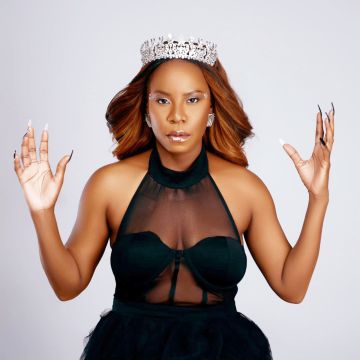 Lady Jaydee
 Ali Kiba
 Diamond Platnumz
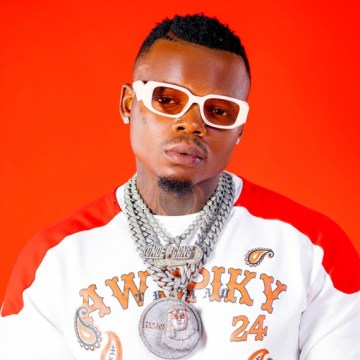 Harmonize
 Zuchu


